
Understanding Attachment: Why Relationship Patterns Keep Repeating
If you find yourself overthinking, pulling away, over-giving, or feeling anxious in relationships, attachment patterns may be playing a role. Attachment theory helps explain how early relationship experiences shape the way we connect, communicate, and respond to closeness or conflict. For many adults, these patterns show up as fear of abandonment, difficulty trusting others, people-pleasing, emotional shutdown, or feeling stuck in the same relationship dynamics.
In attachment-focused therapy, we explore the emotional and nervous system responses that drive these patterns. Rather than simply trying to “fix” behaviors, therapy helps you understand the deeper relational loops underneath them. Through this process, you can begin to develop greater emotional awareness, improve communication, and build more secure, stable relationships—with yourself and others. Over time, these shifts can reduce anxiety in relationships and help you experience connection in a way that feels safer, clearer, and more grounded.
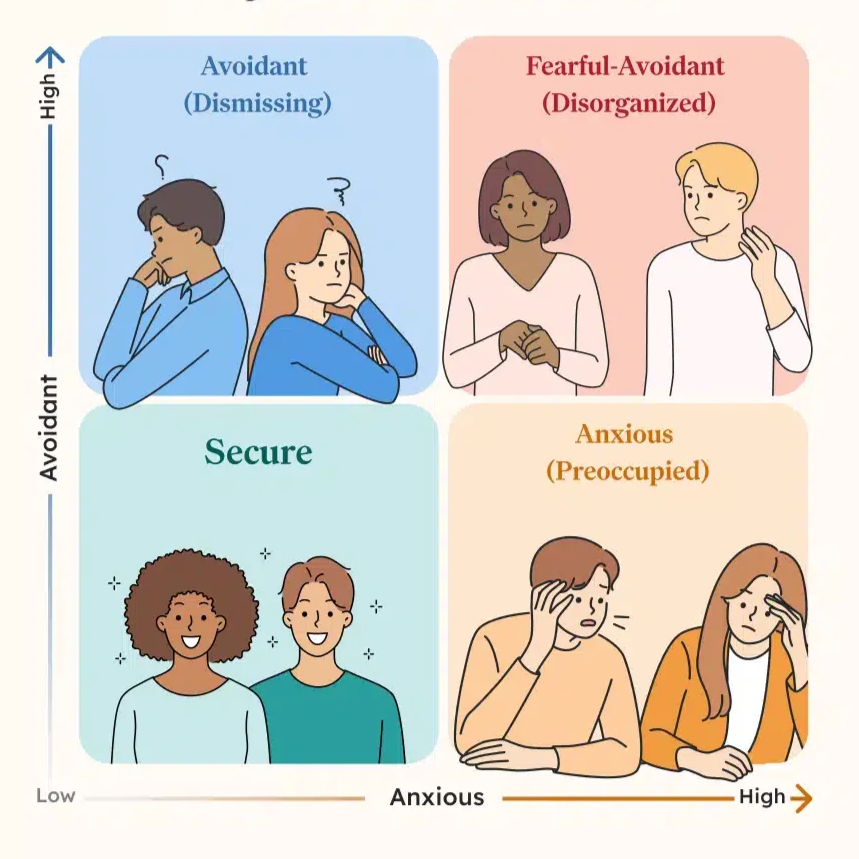
Why We Repeat the Same Relationship Patterns — and How to Break the Cycle
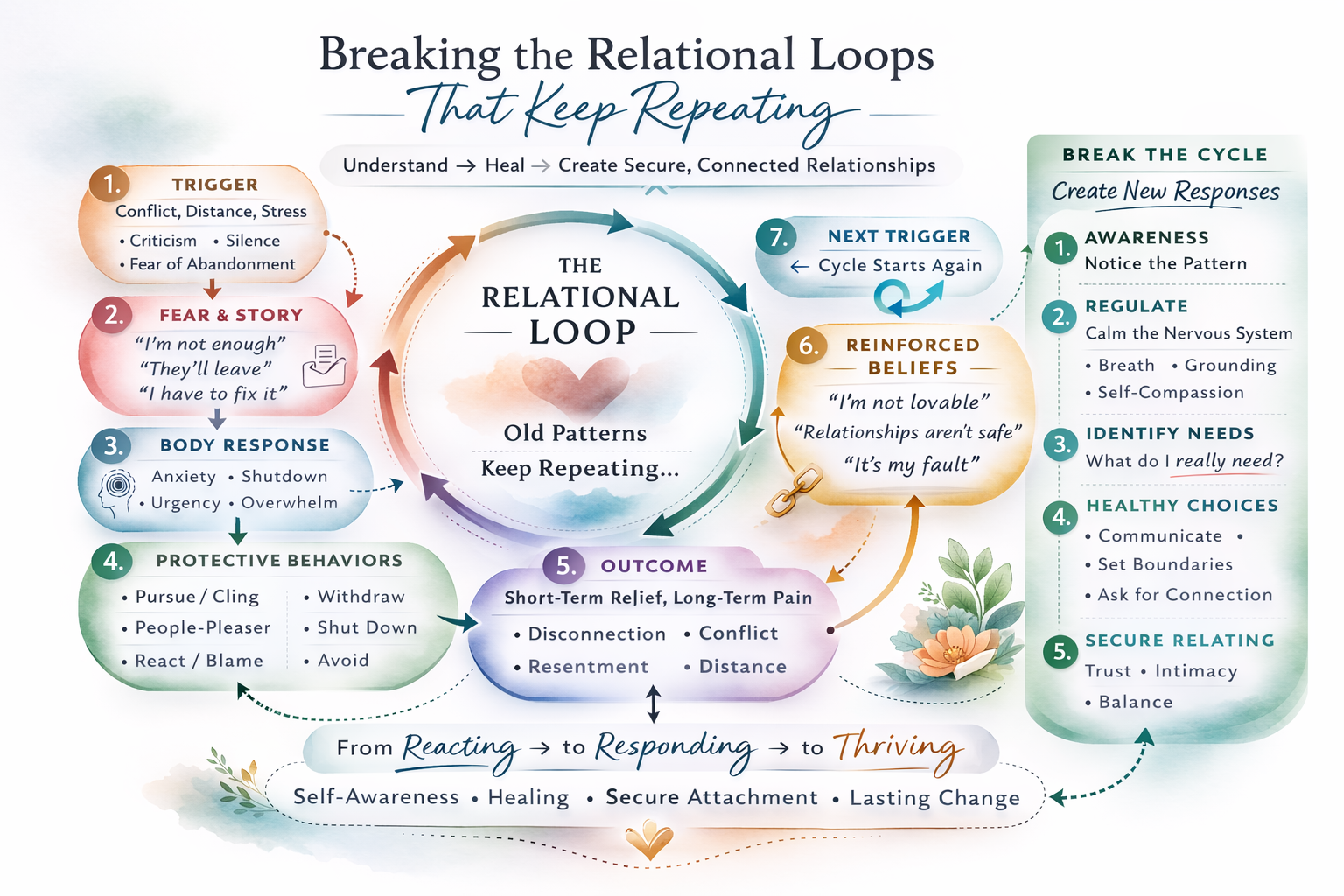
Many people notice they keep experiencing the same challenges in relationships — overthinking conversations, feeling easily hurt or rejected, withdrawing during conflict, or over-functioning for others. Even with insight, these patterns can continue to repeat.
This often happens because of an attachment or anxiety loop. A moment of disconnection or conflict can trigger the nervous system, creating feelings of anxiety, fear, or emotional overwhelm. In response, people may react by seeking reassurance, shutting down, becoming defensive, or avoiding the situation altogether. While these responses are attempts to protect ourselves, they can unintentionally recreate the same relational tension — reinforcing the cycle.
Through attachment-focused, trauma-informed therapy and EMDR, we work to slow down this loop. By building emotional awareness, nervous system regulation, and new ways of responding in relationships, it becomes possible to shift long-standing patterns and move toward more secure, grounded connection with yourself and others.